
There’s a fast way to reduce energy expenses, optimize building equipment performance, and enhance occupants’ comfort, all while complying with national directives. A Building Management System, or BMS system, gives you full control of your building. By installing or retrofitting a building management system (BMS), you can quickly and easily take control of your building and achieve a wide range of benefits in one cost-effective solution.
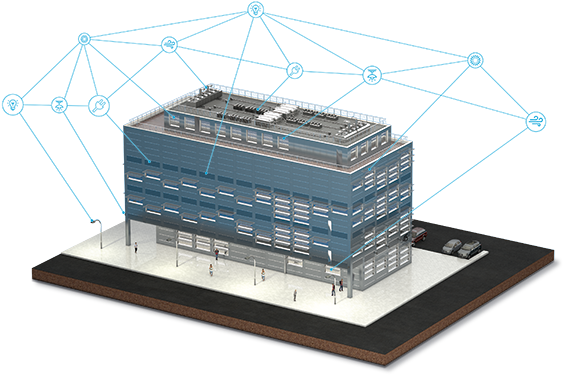
The term building automation system (BAS) is also sometimes referred to as BMS, highlighting the fact that a BMS rarely requires active input once set up correctly and is largely automated. However, an integrated building management system is more often used to refer to BMS systems applied on a larger scale, e.g. to condominiums, tertiary buildings, and public buildings, as part of a full-fledged automation and controlled computer-based system.


With a BMS, a building manager or owner can do more than simply monitor performance. Operators can optimize individual systems, such as monitoring and control functions for air conditioning or other systems to use energy more efficiently and to reduce costs.
CEO of Wattsense
A BMS provides for targeted systems management. With the BMS, owners can analyze current performance, set and adjust targets for different systems, and fine-tune each system to achieve those targets.


We have developed a cost-effective and easy-to-deploy building management system solution (BMS) that communicates with many protocols (LoRaWAN, BAC net IP, Modbus IP, Modbus RTU, M-bus, LON, KNX, LPB, and Diematic). Our solution allows operators to connect to and communicate quickly with all the equipment and systems in a building, even old equipment that was previously not connectable with building management systems. Our solution provides for on-site conversion of old data so that it can be read cleanly via our system interface. The solution also works with any existing BMS or other third-party applications. Wattsense designed this building management solution to simplify BMS. Now you can view and monitor your building remotely through a single interface, whether you are dealing with a modern.
Account executive at Wattsense
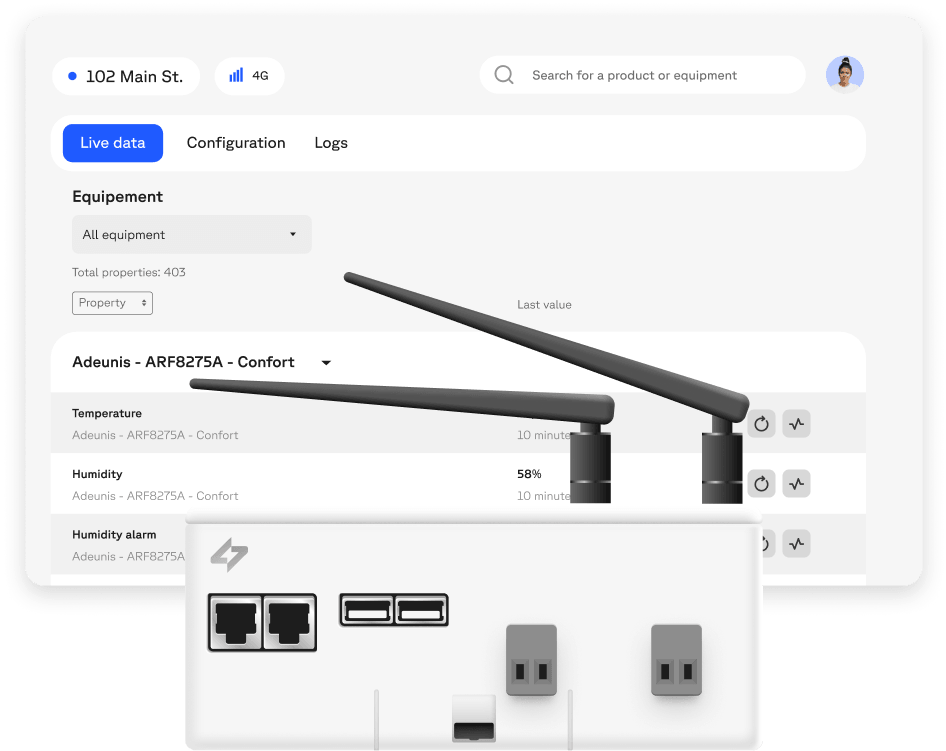
With a single hardware, the Wattsense computer-based control system solution can be used as two products depending on your needs :
Solve Your conectivity problem
Solve Your conectivity problem
By 2027, building automation control systems (BACS) will be mandatory in all commercial buildings in the EU. It's part of a growing push to increase building efficiency while boosting energy performance.
The challenge for the building industry, from property owners to facility managers, is to equip themselves with the best control systems that can be quickly installed and configured to comply with these regulations in the shortest possible time. A modern BMS solution needs to be fully compatible with older systems, while also fully integrated with the new world of the Internet of Things (IoT).
Account executive at Wattsense
Our next-generation BMS solution helps improve the environmental impact of your buildings, boosting energy efficiency and reducing the building’s carbon footprint. Owners can quickly deploy Smart Building applications and software to enhance equipment performance, optimize operating costs and reduce their energy bills.
The environmental impact goes beyond energy efficiency. HVAC systems are also integrated into the Wattsense BMS. Building managers can set temperature controls in one location, while also monitoring how different settings impact overall energy use.
A BMS can monitor equipment and equipment performance as well. Wear-and-tear and regular maintenance issues can be detected early and repairs scheduled in advance. With a BMS, facility management companies or technicians can even remotely monitor and control your building’s equipment to optimize performance and maintenance.
Unifying control of energy supply systems, HVAC needs, and other building systems grants operators full control over a building’s energy demand. By optimizing your heating and cooling needs, you will have a highly positive impact on the electrical grid and global energy demand without disrupting the operation of your facilities and buildings.
Building system management (BMS) isn’t just about the profile of the building as a whole. Individual sensors and indoor/outdoor monitors allow a BMS to control certain sectors or rooms of the building individually. This allows for greater customization and control, with detailed data generated on individual aspects of the system.
Integrate safety and security alerts into your building’s control system. With a BMS, automated alerts can be set for security alerts or various safety alarms, from access control to video surveillance. This could be internal alerts as well – for instance, a temperature alert set in the building’s server room, or even integrated fire alarms.
Account executive at Wattsense